

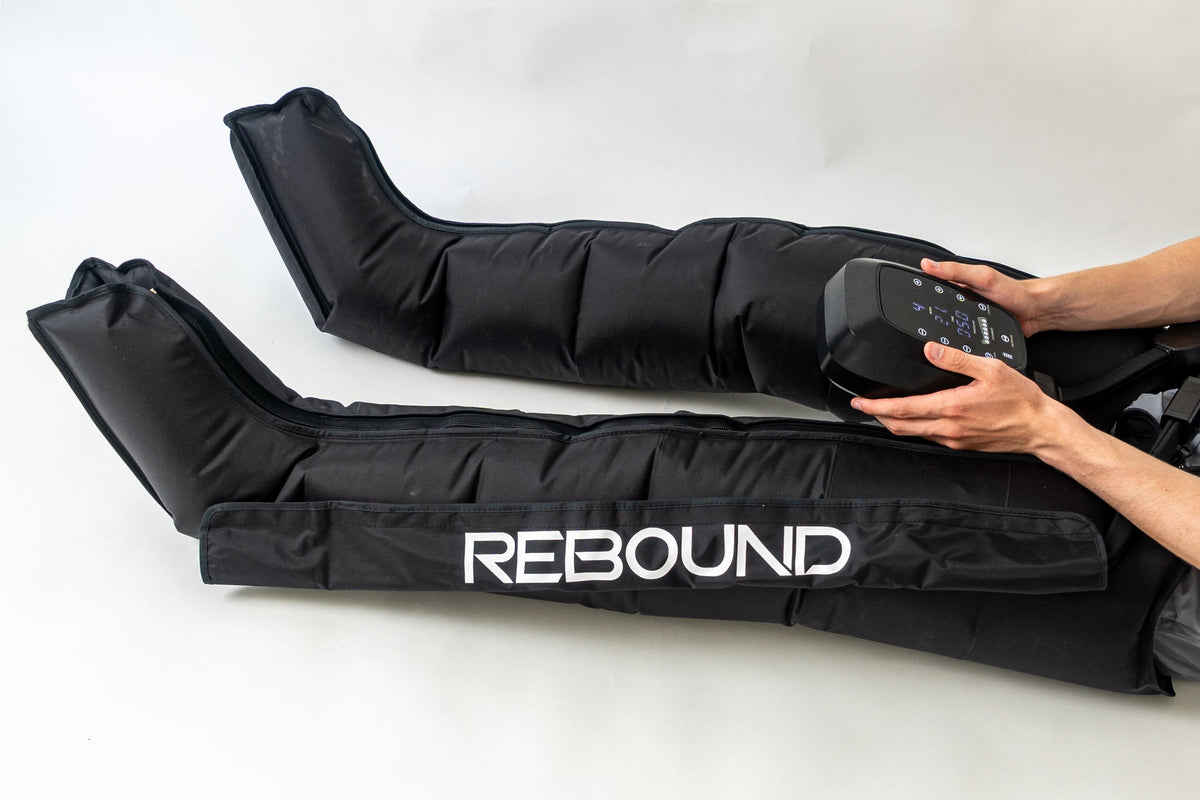
On the control unit you set the pressure from 30 to 260 mmHg, in steps of 5. That is a wide range, and it is wide on purpose: the right pressure differs per person, per day and per programme. Here is how to find yours.
What does mmHg mean?
mmHg stands for millimetres of mercury, the same unit used when your blood pressure is measured. It tells you how firmly each air chamber squeezes your leg as it fills. The higher the number, the firmer it feels.
Start low
Begin your first sessions at around 40 to 60 mmHg. It feels like a firm, steady hug around your legs. That way you get to know the rhythm without it being intense straight away. Once it feels familiar after a few sessions, go up by 5 or 10 mmHg at a time.
A useful reference point
In research on air compression for athletes, around 80 mmHg is the pressure used most often. Use that as a reference point, not a rule. The higher settings are there for people who like it really firm, but higher is not automatically better. It should feel firm, never painful.
Signs it is too much
- It hurts instead of feeling firm
- Your feet or toes tingle or go cold
- You cannot relax and sit tense through the whole session
If you notice any of these, lower the pressure or stop the session.
Adjust it to the day
After an easy session or on a rest day, a lower setting often feels better. After a hard race or a long run you might want a bit more pressure and a longer programme. There is no single setting that is always right. Listen to your legs.
Check first
If you have had thrombosis, a fracture, open wounds or cardiovascular disease, do not use the boots without your doctor’s approval. If you are coming back from an injury, your physio’s advice comes first.
Want to know more about the two sets? Read 6 or 8 air chambers: what is the difference? or see the compression boots.

Leave a comment
This site is protected by hCaptcha and the hCaptcha Privacy Policy and Terms of Service apply.